T.S.Sung宋之绚 (1896 ~ 1976)
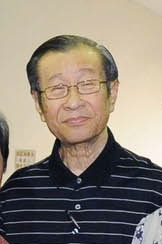
(刘华源)
Teaching, running a school wholeheartedly, promoting Chinese education and spreading Chinese culture constitutes T.S. Sung’s life-long career. He taught in Yang Zheng School Singapore during the 1920s thereafter in Miri (Sarawak) until the Japanese invaded and conquered the oil town.
After the Japanese war in 1945, he traveled to Brunei and continued his career in teaching in Brunei until he retired at the age of 71 in 1967. T.S. Sung was clearly an exception to the general pattern of early Chinese migration to Brunei. His significant contributions to the continued Chinese education and his tremendous influence in the social affairs of Chinese communities in Brunei were widely acknowledged.
In the early part of 20th Century, especially after Dr. Sun Yixian (1866-1925) overthrew the Qing Dynasty in 1911, and in the early years after World War 2, many who came to Brunei were peasants or redundant elements in the rural area. This is not true in his case. He was a university graduate in law. His alma mater was Dong Wu University, ( 东吴大学), Kwangtung. By the time he sailed overseas, 1920s then to Miri thereafter and finally to Brunei immediately after the war, he was effectively bilingual, fluent and literary in Mandarin and in English.. He had different dreams compare to the majority of the overseas Chinese immigrants. He was widely accepted as a very stern, knowledgeable and capable intellectual, one not inclined to do business or in activities to make money. On February 1946, T.S. Sung, giving up the golden opportunities opened up for him by his membership, to representing Miri, in Sarawak’s first Legislature, in accepting an invitation of the Management Committee of Chung Hua Middle School, Kuala Belait to serve as its Headmaster. This marks the beginning of a glorious history both for him and for the School.
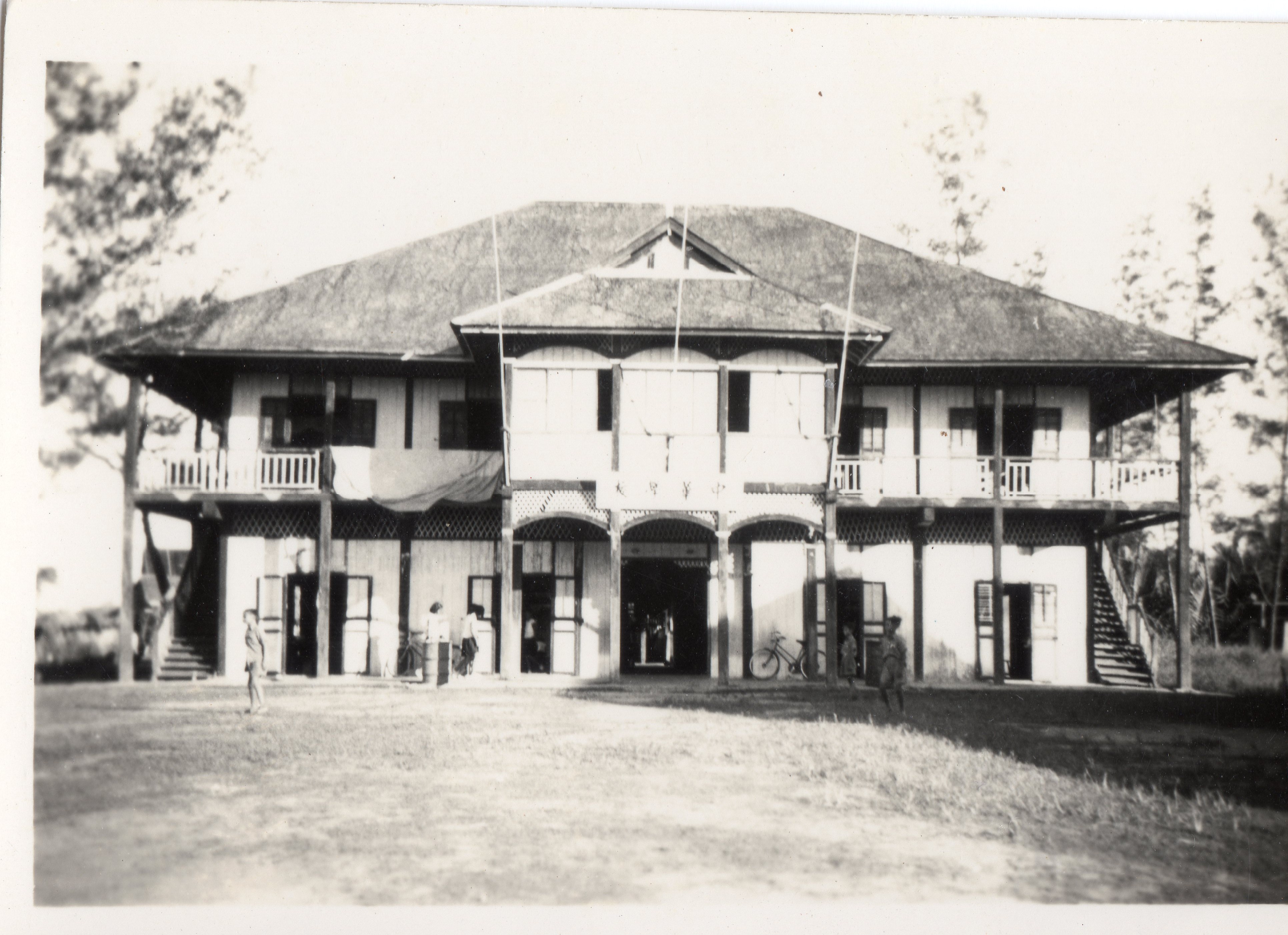
The KB CH School was founded in 1931, 15 years before T.S Sung took over its administration. Its solitary building was one of a few left standing after the bombings by Allied planes during the war in fighting against the invading Japanese. When he took over the administration of the school, the state of the KB CH School was in a state of dilapidation. Undeterred, T.S Sung, together with his wife madam Lin Mo Jun ( 林默君) plunged into their respective works earnestly and wholeheartedly in rebuilding the state of affairs of the school.
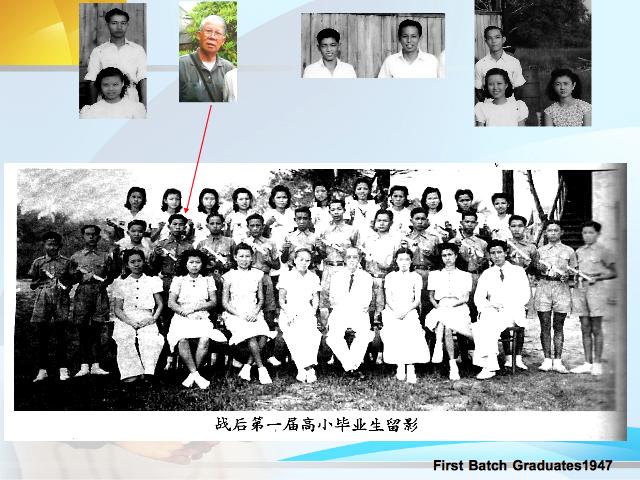
T.S. Sung in reliance of his experience as a Dean of Studies in Chung Hua Public School Miri, set up systems, laid down rules and regulations and quickly started his building program for staff quarters with provision for office for teachers. Madam Lin, graduate of a teacher training institute in China, introduced lessons for singing and dance, using piano to teach musical instruments like mouth organ and flute, and later on trained a school band capable of handling drums, trumpets, cymbals, flutes and other instruments. The couple brightened up the local scene. The residents were so impressed with their competence and dedication, they gave the duo full support to their appeal for constructing additional buildings, wooden ones at first, and concrete ones later to meet the increasing number of students.
In the course of 21(1946-67) years, he turned Chung Hua School into a Chinese school with lower secondary education and kindergarten supported by the Chinese communities and capable of adjusting to changing circumstances. By 1957, it was renamed as “Chung Hua Middle School Kuala Belait.” Its secondary provided its primary graduates access to secondary education without any hassle. This also helped to prevent its best students from drifting into mission schools. Kindergarten was a necessary expansion as it would be a source of steady income and a reliable source of intake for the primary section. The number of students increased from one hundred over in 1946 to one thousand and above in 1967.
Increase of students meant that T.S. Sung had to recruit more teachers and construct more buildings. His best teachers were recruited after 1949 from Hong Kong or Taiwan. They were generally believed to be anti-communist mainlanders but they, knowing that the Chinese in South-east Asia then were pro-communist China hardly allowed their political inclination to interfere with their teaching. School buildings were increased from one to five.
In 1951, 3 wooden structures were erected on where the present stadium is situate at a cost of B$70 thousands. This expansion provided for staff quarters and Administration Office. The expenses were paid for out of donations from Chinese communities and revenue from concerts launched by the school over the period of a few years. In 1956, one modern, double-storey concrete building was erected in place of its wooden pre-war building. In 1967, another double-storey concrete building providing for 8 class-rooms was completed. Both assets cost the School B$500 thousands, 50% thereof was reimbursed by the Government.
Hence forth, Chung Hua Middle School Kuala Belait under the leadership of T.S. Sung emerged as an outstanding Chinese school, one of the 8 in Brunei, of which three were secondary complete with primary and kindergarten. CHMS KB by now earned the admiration of the general public but also commanded the respect of the Government as well.
As principal, he took charge of the school, led his staff professionally and expected them to follow his example as a dedicated and disciplined teacher. His ambition was to make CHMS famous, its students able to do well in examinations and to excel in sports and other extra-curricular activities. That way, he believed, the flow of students to Chung Hua would continue unabated, and Chung Hua would keep on making progress.
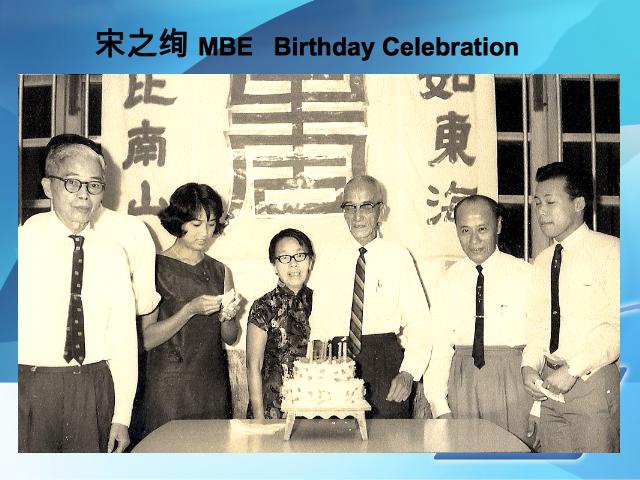
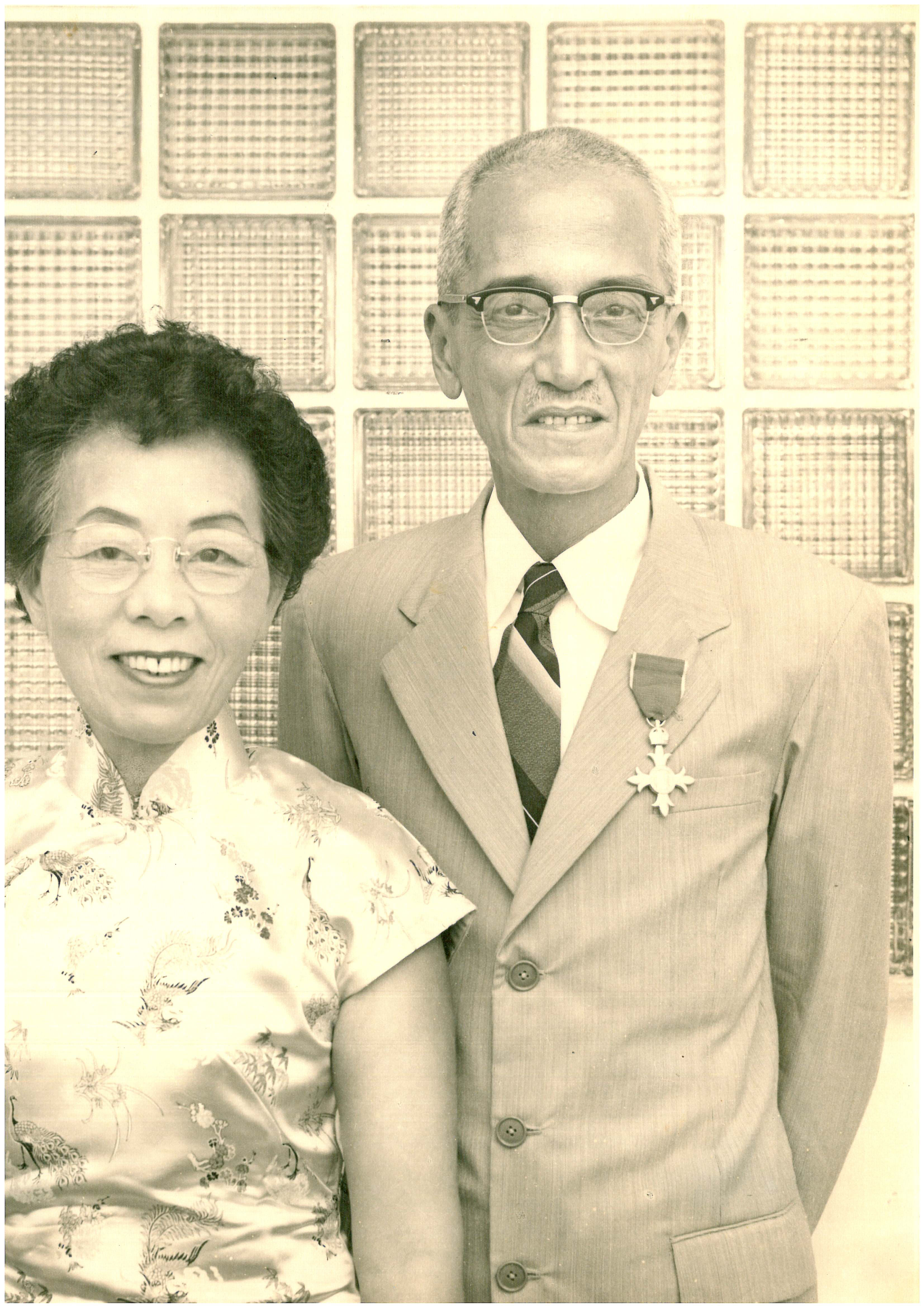
Besides, T.S. Sung had been good at maintaining harmony and unity in the Management Committee. sorting out differences among members from different dialect groups, with different backgrounds. He showed his flair in tackling the “newly rich” people from the world of business. He also got himself actively involved with the affairs of clans and associations, offering them his service as advisor or secretary, after school hours, ex gratia. He played a pivotal role in the yearly fund raising activities like New Year lion dance performance and school concerts. He and his wife were the pillars of CHMS KB. In recognition of his capability, in 1954, the British Resident appointed him a member of Belait Chinese Affairs Advisory Committee and the following year the only Chinese member in the State Education Advisory Committee. In 1956, three years before the United Kingdom of Great Britain granted Self-Government to Brunei, T.S. Sung was awarded MBE by Her Majesty Queen Elizabeth the second, the only Chinese in Brunei receiving such honour. He deserved it.
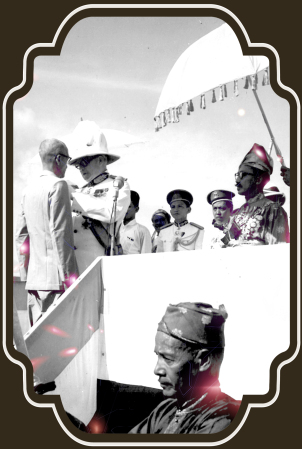
T.S. Sung’s influence and his weight in Chinese society in Brunei could be measured by his contribution in the two instances below:
( 1 ) In November 1955 the Department of Education informed by letter all Chinese schools that the Brunei Government would as from January 1, 1956 grant them financial aid amounting to 50% of their current and capital expenditure. This was taken to be timely award to Brunei Chinese Communities for keeping their schools free from political disturbances as was then common in the region. It was of course a tremendous boost in furtherance of Chinese education in Brunei. It also helped to overcome the difficulty Brunei graduates faced in pursuing further education abroad. It was generally believed that T.S. Sung, articulate and English speaking, had a positive influence on British Resident. Through his membership of the two Advisory Committees set up by the BR T.S. Sung probably corrected his negative view of Chinese schools in Brunei.
( 2 ) On February 3, 1958, the State Education Advisory Community received words that the Government decided to stop grant of aid to the Chinese school effective from 1959. In response to a call for action, Pehin Dato Temonggong Lim Chen Choo convened on March 15, a meeting of representatives of Management Committees of all the Chinese schools, 8 in number. That meeting elected 7 prominent persons namely Pehin Lim Chen Choo, Ong Kim Kee, Yap Chong Teck, Lim Teck Hoo, Yong Tze Shan, Lim Teck Jin, and T.S. Sung to sign a petition and submitted it to the British Resident appealing to him to reverse government decision on the said matter. The appeal was upheld. As it turned out, Government finally ceased granting aid 11 years later. It was generally appreciated that T.S. Sung played a crucial role in this matter and that his British decoration did carry considerable weight in the eyes of the then British Resident.
T.S. Sung’s achievement was by no means physical. He left behind valuable legacy: a well run school famous for the outstanding performance of its students whether in study or in extra-curricular activities. For 21 years from 1946 -1967, 1124 primary students graduated in 23 batches and 210 lower secondary students graduated in 9 batches. all receiving Graduation Certificates from him personally. Many of them who did well in their later endeavors whether in Brunei or overseas acknowledged that their success was due to the sound foundation laid down by the strenuous effort of T.S. Sung and his wife. It was often remarked by Chung Hua alumni that the respectable couple really molded their character and shaped their future.
T.S. Sung passed away peacefully in 1976 at the age 80. survived by his wife and an adopted daughter now settled down in Australia. His the other half died a few years later. They were both buried at Kuala Belait Chinese Cemetery. Part of his estate was used to set up a Scholarship Foundation named after them in accordance with the provisions of his will a charitable act consistent with his philosophy and outlook of life.
A LAMP that lights the dark world of ignorance and backwardness has ceased burning. A noble soul that cares and loves the folks of this little oil town still hovers in their deep memory!
T.S. Sung will forever be remembered for his sacrifice and his service to this land. His features as a solemn scholar, tall and slim, crew cut and spectacled, in simple dress, will always remain in the minds of the people of Brunei. He will always be the model and the standard for all the teachers to follow, now and for a very long time to come.
Written May 30, 2009
Addendum
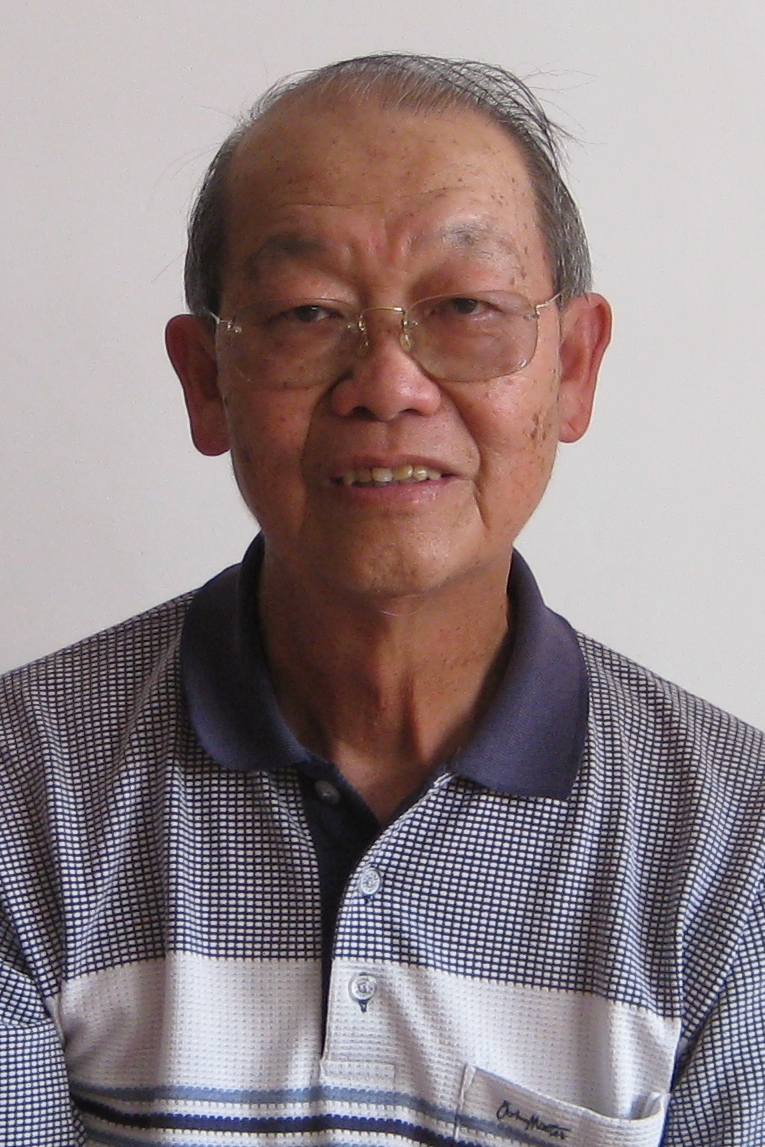
After reading the story, Chow Kit has added the following:
“Just before the Japanese landed in Miri in 1942, Mr. Sung, his wife together with friends and their families (including the Chow Ngen family) escaped to Diligan, a one shop village near the Niah river mouth. His name was in the Japanese black list of wanted individuals who were active in raising funds in support of the fight against Japan in China. The Japanese soon came after him. They found and captured him hiding in the outhouse behind the main building and sent him to prison in Kuching. While in hiding, he left a note to my father asking him to take care of his wife if he was caught. After his arrest, Mrs. Sung became increasingly depressed, missing Mr. Sung so much that she almost went mad and had attempted suicide in several occasions. We later learned from him in his class that life in prison was extremely harsh and difficult. He was subjected to daily tortures and had to resort to eating baby mice to stay alive. Miraculously, he survived the ordeal. Upon Japan’s surrender in 1945, he was released from prison and returned to Miri to tell his story”.
 Memories of The Way We Were
Just before the Japanese landed in Miri in 1942, Mr. Sung, his wife together with friends and their families (including the Chow Ngen family) escaped to Diligan, a one shop village at the Niah river mouth. His name was in the Japanese black list of wanted individuals who were active in raising funds in support of the fight against Japan in China. The Japanese soon came after him. They found and captured him hiding in the outhouse behind the main building and sent him to prison in Kuching. While in hiding, he left a note to my father asking him to take care of his wife if he was caught. After his arrest, Mrs. Sung became increasingly depressed, missing Mr. Sung so much that she almost went mad and had attempted suicide in several occasions. We later learned from him in his class that life in prison was extremely harsh and difficult. He was subjected to daily tortures and had to resort to eating baby mice to stay alive. Miraculously, he survived the ordeal. Upon Japan’s surrender in 1945, he was released from prison and returned to Miri to tell his story.
LikeLiked by 1 person
Thanks very much for your input, Francis. We appreciate it and please keep them coming. For all of you that read the posts, do feel free to write comments &/or add your own stories. We welcome your input. Thank you.
LikeLike
The add on view from Francis Chow Kat Ying is beautifully done. I like it very much. My thanks to Francis Chow and my congratulations to Chow Kat Ying for being an expert now in his editorial work.
LikeLike