Batch 5 1951
To all of you who are now in your 70s and 80s in 2014, I invite you to join me on a short trip down memory lane about growing up in Kuala Belait when we were young. The recollections were jotted down in random order as they came to mind. I sincerely hope they help you remember some of your fond memories. We survived with mothers who had no maids. My beloved mother, Lim Ah Yap, cooked, cleaned, and cared for the eight children.
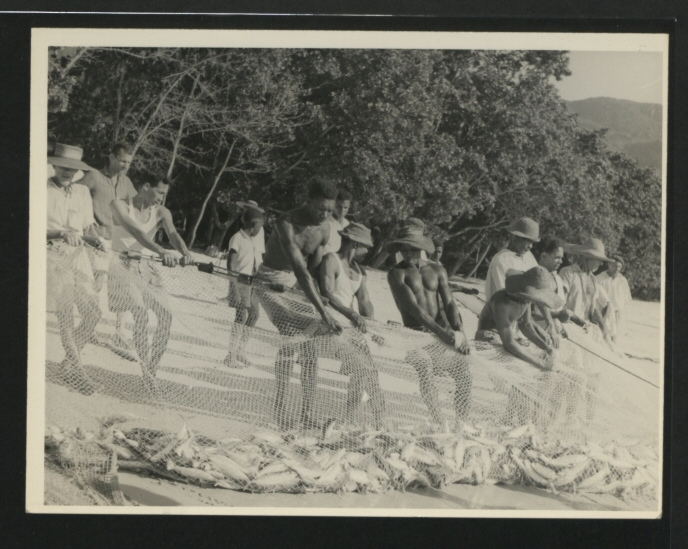
On Sunday mornings, we kids would go to the beach at South China Sea to swim, and sometimes helped to pull the fishing nets to shore. For our effort, the fisherman would give us a fish or two. On the way home, we pulled along some tree branches as firewood for mom to cook dinner.
We never had birthday parties until many years later, after we received our first paycheck. Having one egg (shared with the entire family of 10) was a birthday treat for me!
When our parents found out we were caned in school, they doubled the punishment by giving us the same at home. Parents always sided with the teachers. To be sure, we knew that parental authority and food were never to be taken for granted.
Clothes were hand-me-downs or home-made. I counted my blessings when clothes were passed down to me from my elder brother who was then 3 years my senior. A crew-cut by a Hock-chew barber cost 20 cents, and the hair was cropped almost all the way to the top. The choice was either by him or by our own home’ barber. Hairstyle and clothes were not important to our friends and family; it was what we did and who we were that mattered most.
Toilet paper was torn- up newspapers hanging on a hook that you crumbled up first to soften before use. White toilet paper was an unknown luxury until after I left school. The first time I used a modern toilet I squatted on it as I had never used anything else other than the bucket toilet. Our children would not know the danger of visiting the outdoor toilet at night, which often caused one to jump up in fright when the man collecting the bucket came while you were doing your business!
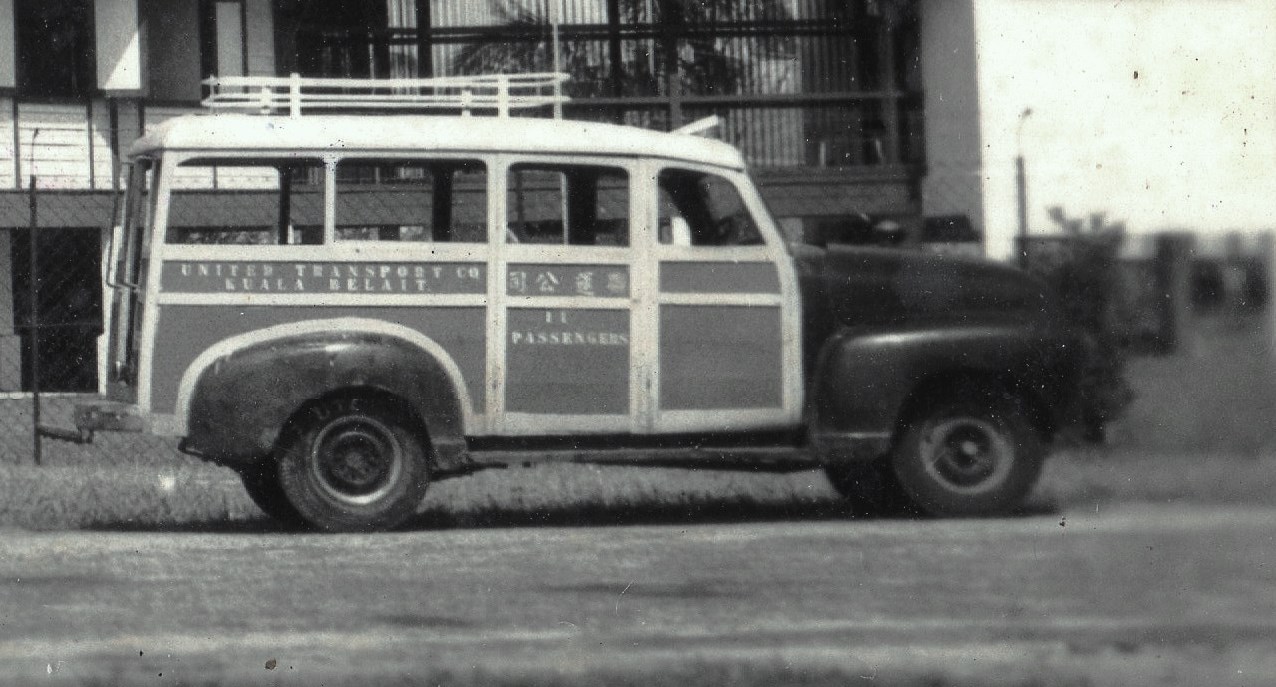
Riding in the back of a lorry or on a bus assembled from a lorry engine and wooden planks was a special treat. It took more than 5 hours’ bus ride from KB to Bandar, en route driving on the beaches and taking the ferry at Danau to Tutong Beach. Ironically, no one thought to complain about the lack of air-conditioning in the bus because it was such a fun adventure.
As children, we would ride with our parents on bicycles or motorcycles in 2s or 3s. Wealthier ones had cars without seat belts or air bags.
Many of us participated enthusiastically in sports and other school activities. “Lik kak” (力克隊) was our favorite basketball team, but we also found simple ways to entertain and amuse ourselves.
We did not have store-bought toys. With mere 7 pebbles, one could enjoy an endless game. With a ball (ideally a tennis ball), we boys would run like crazy for hours, whereas kicking a bound feather pad and jumping rope were the girls’ favorite games.
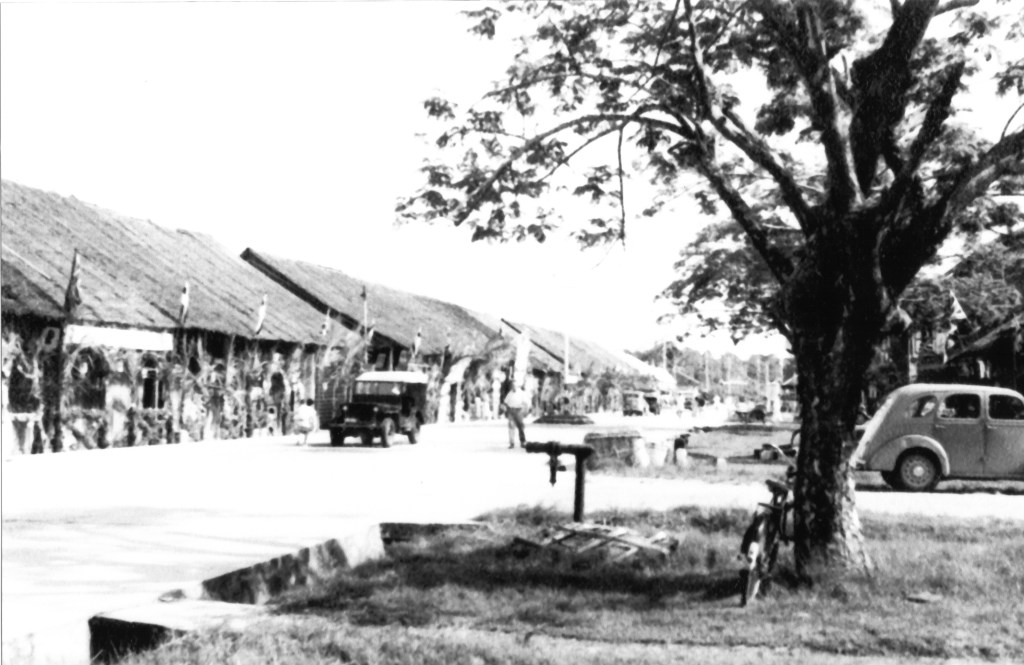

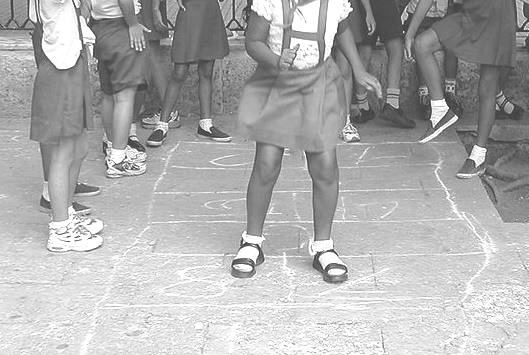

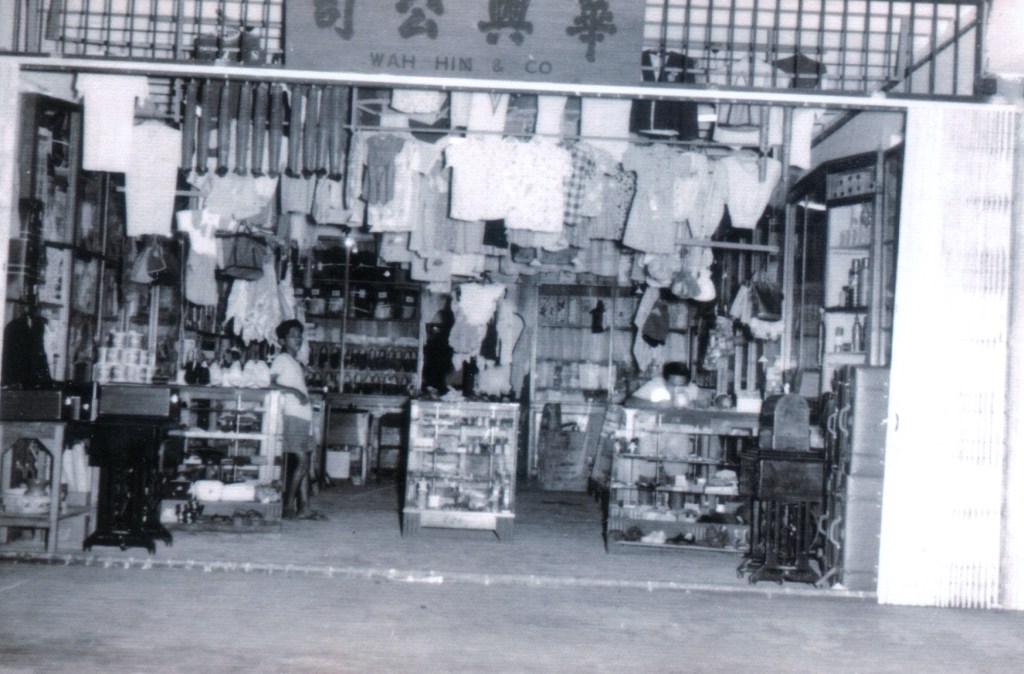

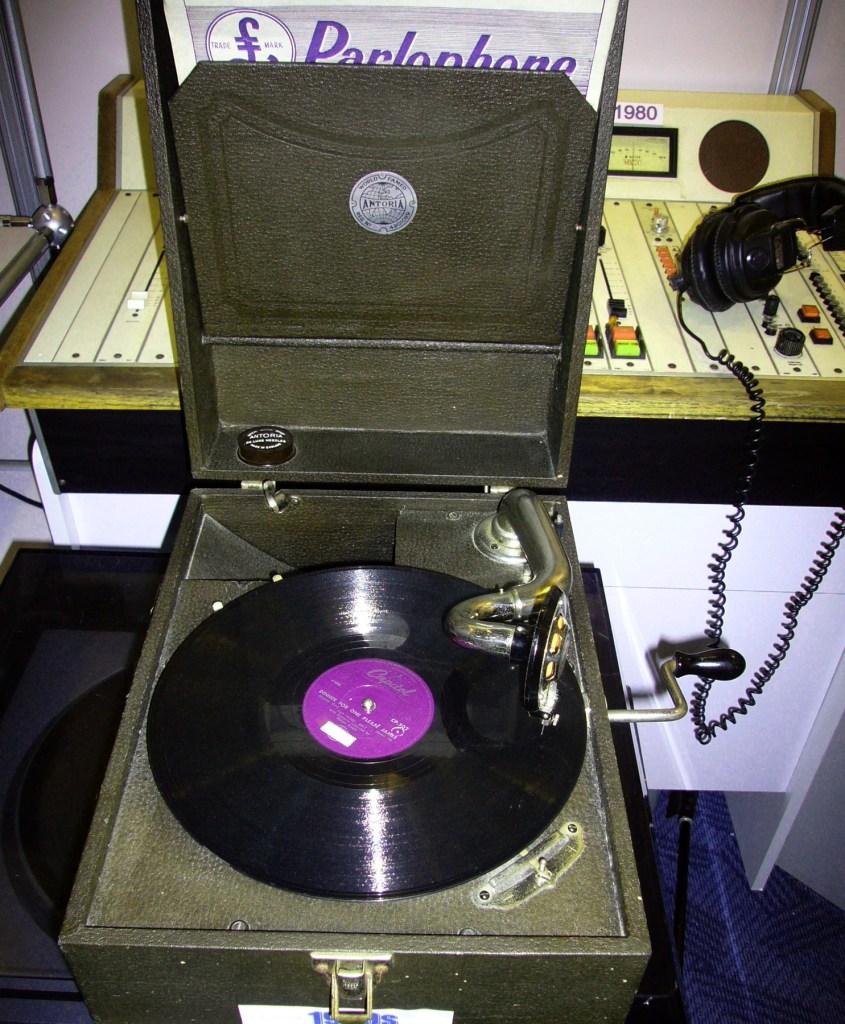
We flew kites constructed with strings coated with pounded glass powder and glue made from mixing hot water and flour. Consequently, we often got cuts on our fingers handling the strings. Happiness was winning a kite fight with local “samsings”. We designed and made our own kites to suit our “fighting style”. Unfortunately, the ones I made never flew!
We rode bikes or walked to our friend’s house and just yelled or whistled from outside for him to come out. Once, the father of a friend told me off by saying, “my children do have names. They are not dogs!” That reproach put a stop to the crude manner of announcing one’s arrival. Thereafter, I just sat quietly at their verandah waiting for one of them to come out.

During the weekends we swam in the Belait River wearing only our birthday suits. Hence, no one got in trouble for sneaking in a swim session without our parents’ consent. No one laughed at you because your “kuku” was small or crooked, etc. We stopped going to swim in the Belait River after one of our friends, William, was killed by a crocodile! Scary! We went fishing in the ponds and streams and to the jungle to catch spiders and birds without worrying about mosquitoes and snakes. We caught guppies from the drain and when it rained, we jumped in to have a swim too! The worst disease you could get as a child was ‘lock jaw’ (Tetanus) which every child knew was caused by rusty nails. Home brewed bitter herbal tonic water, touted as the “cure-all” for everything, was taken at the first hint of malaria and other ailments.
We fell out of trees, got cuts, and had broken bones and teeth, yet we continued doing the stunts Tarzan did. We had such fun during our childhood days!
Every day we waited eagerly for the bell to ring signaling the end of classes for the day. At the first ring, we all rushed out to the field to have some fun playing games, even if the teacher was still busy talking or writing on the blackboard the homework assignment due for the next day. We were responsible for our own studies even though our parents tried to make sure that we completed our homework at night under an oil lamp. But we were so tired that we fell asleep almost immediately after our parents retired to their bedroom. They lectured us almost daily to make us understand the amount of sacrifice required of them even just to let us attend school. It was after writing the final examinations that we panicked, for then we knew that we had not done our homework diligently. However, we did well in our favorite subjects so that we averaged the marks enabled us to pass the year’s studies and got promoted to the next class up.
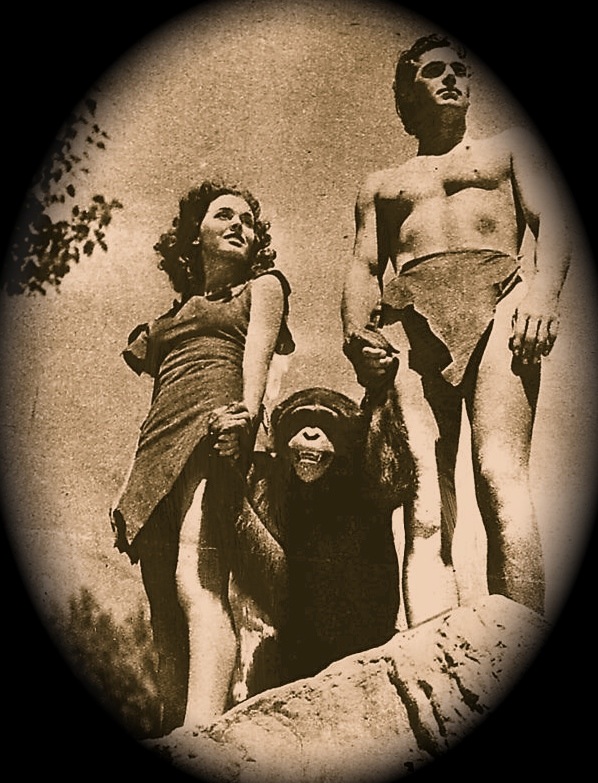
Tarzan was our favorite movie. Saturday nights we hung around the cinema hoping that some adults would take us in to enjoy the cowboy shows. Each adult could bring one child in to attend a movie. The first- class seats had rattan chairs. If 5 of us were lucky to be brought in free, then all 5 of us would sit on one long wooden bench.
Sometimes father would give my siblings and I 25 cents to see a cheap matinee show. We would attempt to get in by pushing and mixing among the crowd entering the cinema, especially when the entry door was manned by our friend Ah Bieu. Once in, we reserved seats for our friends with handkerchiefs and extra jackets. When the show ended, the whole floor would be littered with the husks of kwa chi (roasted watermelon seeds dyed with red and black coloures) and empty colorful red paper bags.
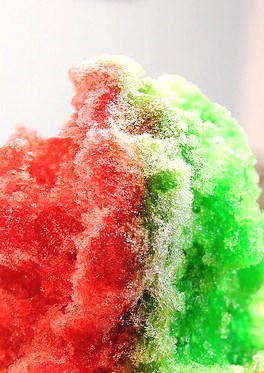
Snacks were plenty, simple and inexpensive in our young days. Sometimes a shaved ice ball would be dipped in colorful red or green syrup, and sometimes in a sarsee drink. The cost was 5 cents only. It was an excellent cooling treat for a hot afternoon after participating in sports.
It cost only 5 cents for a small paper cone of kachang puteh or Kwa Chi and 10 cents for “ang tau ping” (red beans on top of shaved ice and sweetened with condensed milk). Back then all snacks were prepared without chemicals or preservatives to `keep fresh’.
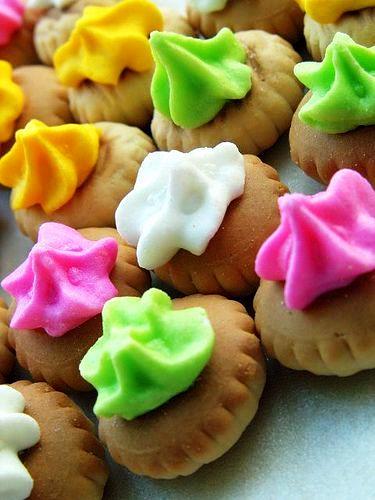
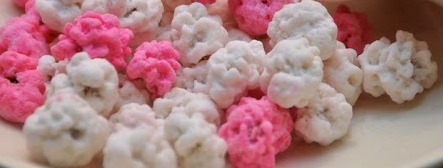
When the kachang puteh man came peddling his goods, balanced on his head was a 6-tiered food container, wherein were found different flavors of kachang & icing-sugar coated belly button biscuits. We bartered our old exercise books in exchange for a paper cone of kachang puteh.
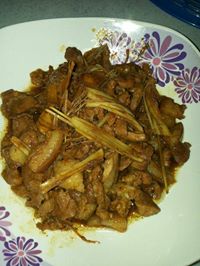
One order of chow kway teow cost 20 cents, and we brought our own egg for the man to cook it. One ‘roti canai’ cost 10 cents, and 10 bananas could be had for 5 cents.
We bought Bengali bread from the Indian roti man who peddled his bicycle around the neighborhoods with the familiar bicycle bell ringing to announce his coming.
Sometimes we bought hot, just out- of- the- oven loaves of bread, We wolved down the crispy crust at the top and bottom and both sides of the bread before spreading butter and kaya on the rest of the yummy treats and eating it.
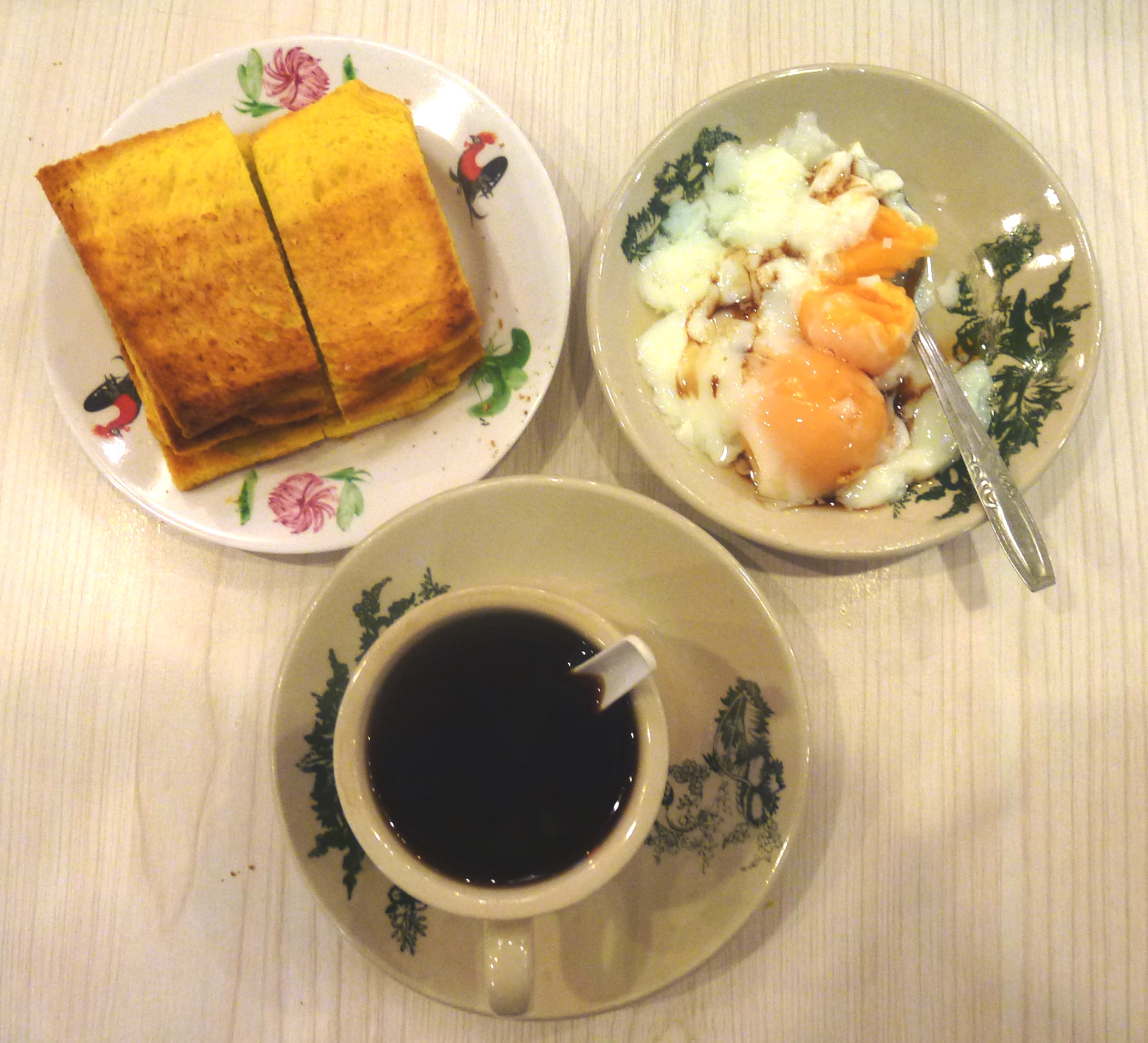
Sometimes we ordered charcoal-toasted bread and 2 soft-boiled eggs, we crushed the yokes and whites mixed them together, followed by dipping the toasts into the mixture to eat. We drank hot black coffee that was first poured on the saucer to reduce the temperature.
Even though we ate salty, very sweet, & oily foods, white bread, used real butter, and drank coffee or tea, we weren’t overweight or had diabetes because we ran and cycled all day.
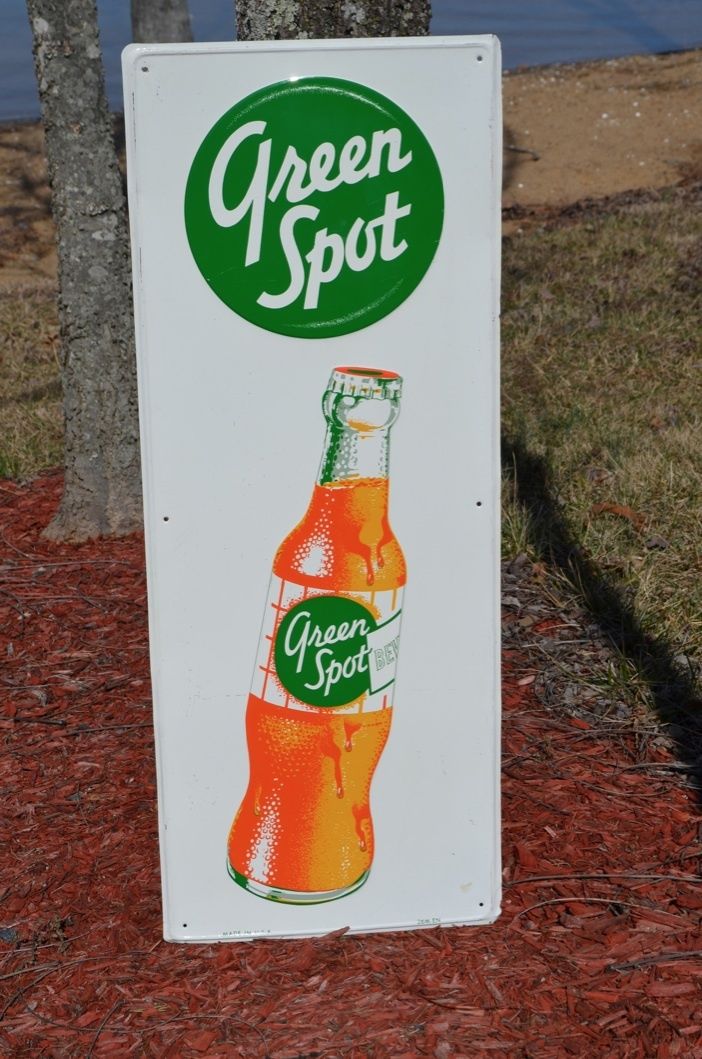
F&N orange and other soda drinks were stored in wooden crates and displayed on the table during Chinese New Year. Eating chicken was a treat that happened only on Chinese New Year and on “Chap Goh Meh”.
We always carried in our pocket a red packet containing 2 coins during the Chinese New Year. Firecrackers were set off from private houses or shop-houses, almost every evening competing with each other in the sight and sound. Next morning the streets were usually covered in red. It was a time to get together for both adults and children to talk and play in the absence of any electronic devices and distractions.
We are the last generation to know how to use logarithm tables and slide rulers, and we passed math exams without calculators. There were no computers or googling on the internet to help us search for answers. Everything we learnt was from our parents, teachers and books, which went straight into our `computer’ heads. We knew that life was about living it well with friends and family, and not through a monitor screen on an iPad, computer or TV.
I believe our generation’s upbringing enables us to become the best parents of today because we remember the hard times we experienced as kids, thus helping us understand and appreciate every little convenience and luxurious children and grandchildren enjoy today.
Please forward this article to your kids so they can understand a little bit about why we are “the way we were” and why we care so much to keep the memories of our younger days alive.

Batch 7 graduate 1952
The author wishes to thank Lin Yun Yin for taking time to read, review and edit this article
SK 6 September 2014
ADDENDUM By the two Chow Brothers : Chow Kit Ying and Chow Kat Liang 11/24/2014
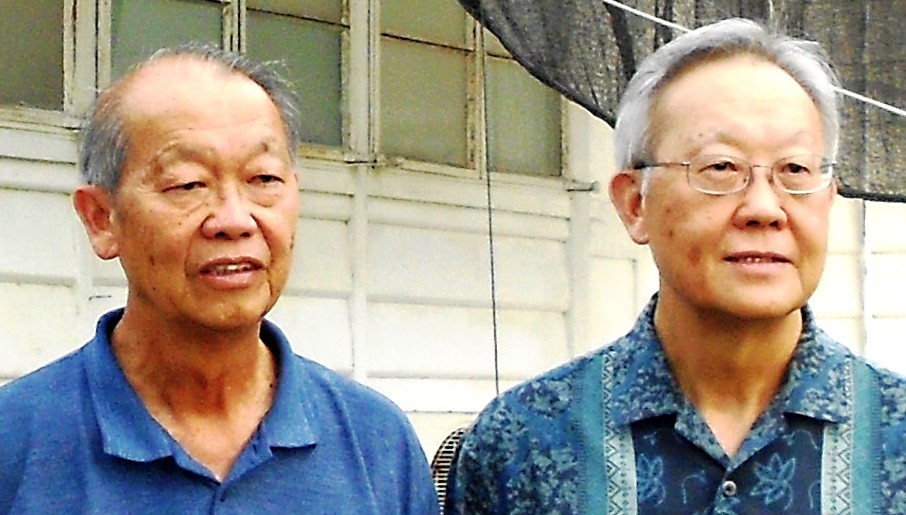
Dear See Kui,
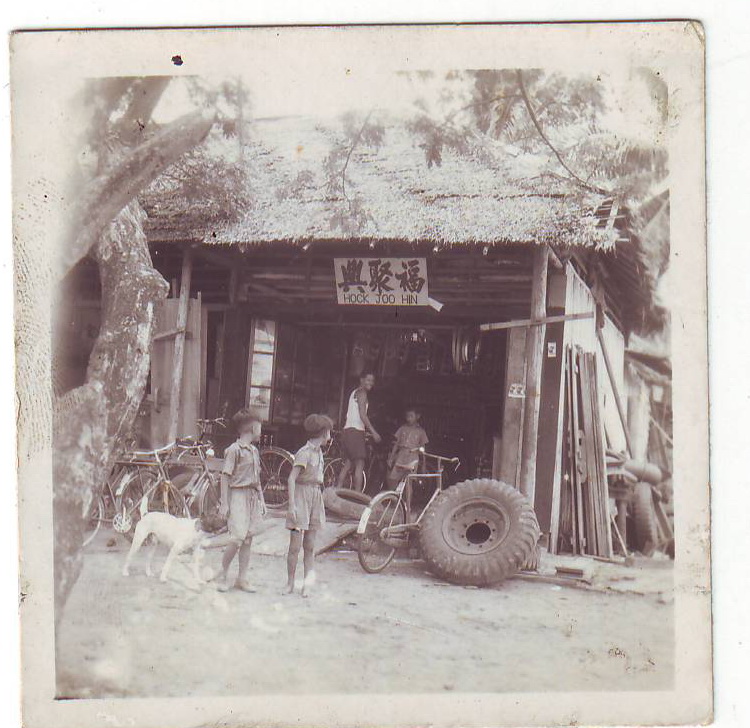
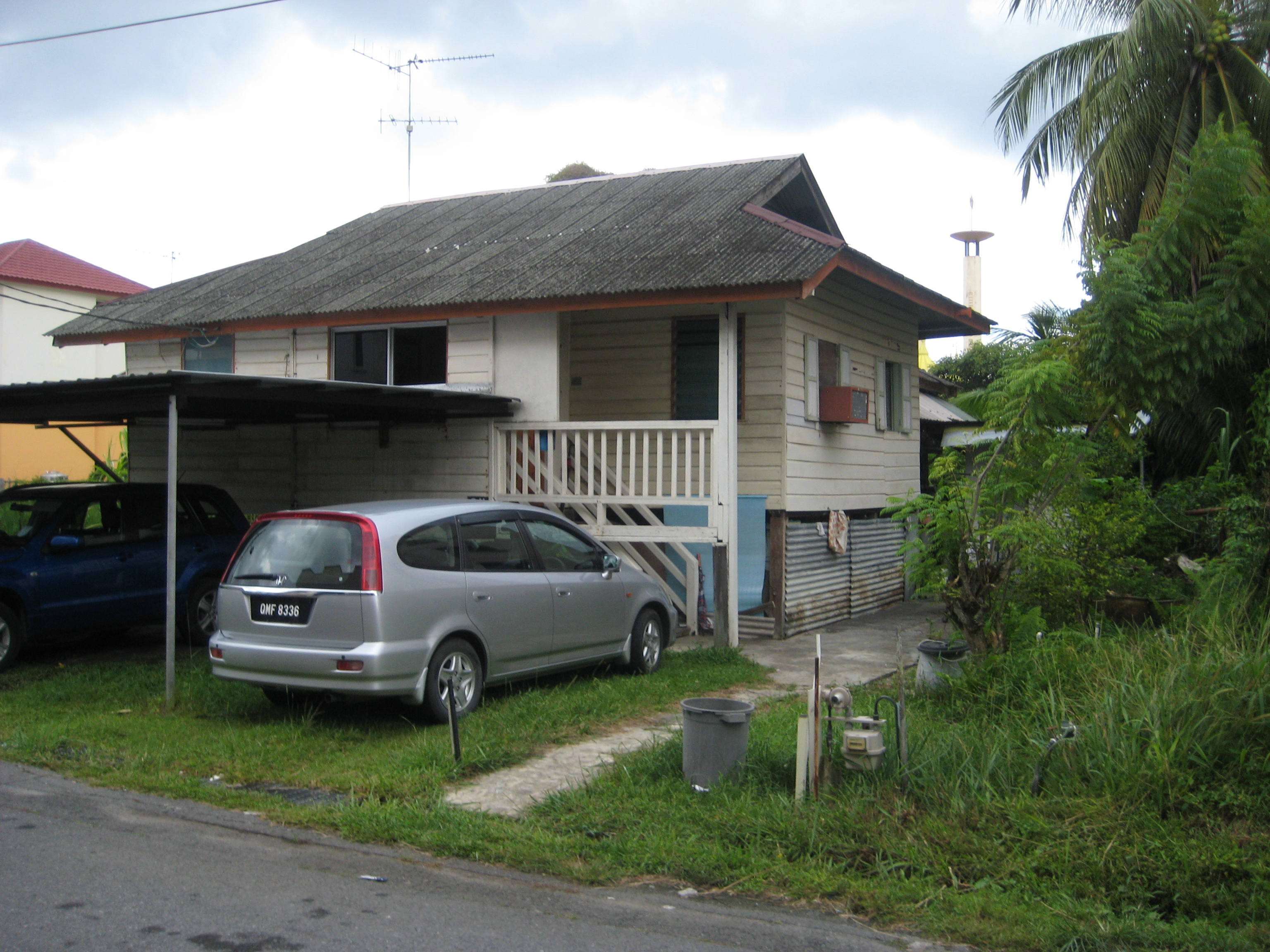
Your story reminds us of at least two of the many incidences at our house at Jalan Masjid in Kampung Malay. First, let me describe the home (pictured) we lived in from 1947 to 1952. Of course, the house in the photo barely resembles the old one since it has been rremodelledand upgraded several times. Back then, it had no carport, minivan, or window air conditioning unit.
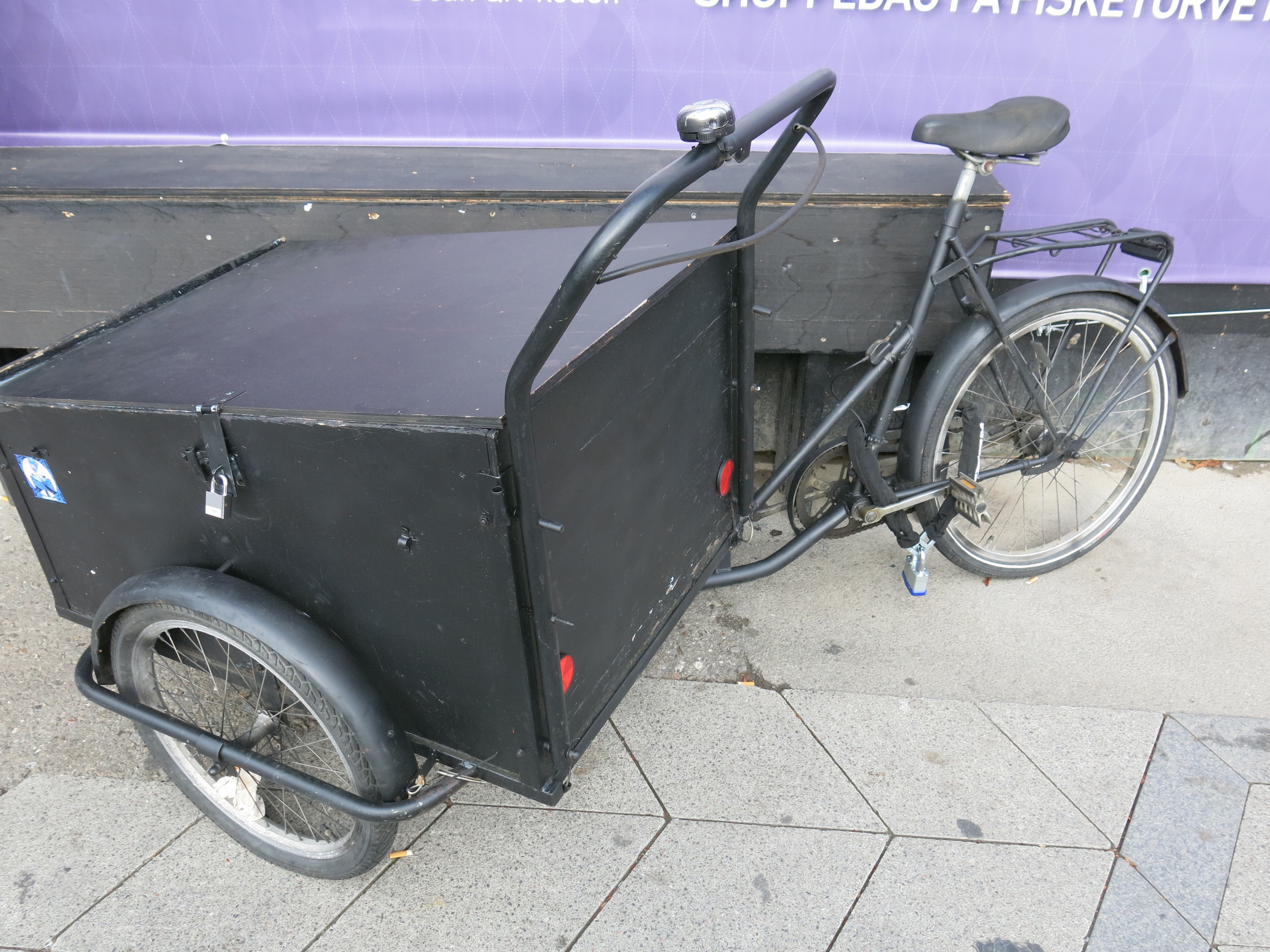
However, there was a fence in the front yard and a huge mango tree in the right front yard. Next to the mango tree was a stand-alone bath house, and 10 to 15 feet away was a well with water used for bathing and washing clothes. For drinking water, we used to borrow tricycles (similar to the one in the photo) from shopkeepers and haul 44-gallon drums a couple of miles from where tap water was available. Near the rear staircase of the house, we also placed 44-gallon drums to catch rainwater for other uses. It is not quite visible in the photo, but the house sat on 8-foot tall stilts.
The space below was often utilised as an auto repair workshop and for storing stacks of firewood. Wood was used for cooking in those days. We had the responsibility to split them, haul them to the kitchen upstairs, and place them under the stove. We spent countless hours messing around with the dismantled auto parts purporting to help out with our cousins and friends. Our childhood friends were frequent visitors to this old house.
The old house had 3 bedrooms upstairs, and we often played with 3 to 4 friends in one of the bedrooms. Our friends (the author of the above story was one of them) would whistle to signal their arrival, and my brother and I would meet and let them in. We would then sneak into a bedroom, turn it upside down, play games, tease each other and even wrestle.
One night in the wee hours, while we were having so much fun, we must have forgotten it was late. The clamour and laughter we made aroused the entire household. Finally, my late father, unable to sleep, knocked on the door and yelled, "你們做什麽?"“what are you boys doing?” supposedly in Mandarin. It was hilarious as he spoke no Mandarin and sounded more like a slight twang of his native Cantonese. It was effective, though, as there was immediate and complete silence in the room; one could even hear a pin drop. One of our friends even attempted to flee by jumping out of the window. Needless to say, we dispersed quietly in a hurry, and peace and quiet were restored again. My father was a man of few words, and when he spoke, it often went a long way.
Another occurrence happened in the same bedroom with the same crowd. We cannibalised a generator from an old motorcycle to create an electric shock prank. We threaded a wire from below, pulled it through a window, and shielded it from view. We then spread the bare ends of the cable under a pillowcase. After relentless persuasion, we eventually got someone to lie on the pillow. Then the person hiding below furiously cranked the dynamo to generate enough electricity. That successful attempt produced a victim with rosy red ears.
Boys will be boys, and we couldn’t help being mischievous, playful, naive and simply innocent.
 Memories of The Way We Were
Reblogged this on KatChow.
LikeLiked by 1 person
Dear elder, much thanks for reminding us of the good old days way back in Kuala Belait in the 50s
Chan Siew Fang, Class of 1956
LikeLiked by 1 person
Dear Siew Fang, thank you very much for letting us know that you enjoyed looking back to your own good old days in Kuala Belait in the ’50s. What were your favourite games, and with whom do you play? Do you still remember the name of the cinema you frequently attend and name one of the unforgettable movies? Do you still remember the names of your neighbours? I like you to share your own sweet memories here. I hope to hear from you soon, maybe with photos you lived in the 50s and the school you attended! By the way, what type of transport do you use to go to Seria? Best regards from SK Chong.
LikeLiked by 1 person
Dear Mr Chong, thank you for sharing these invaluable memories
You tasted salt earlier than many of us, you had gone through more testing times. But all these toughened us up & made us the more resilient
Best of luck for the future
May The New Year bring bring you continued good health
LikeLike