| …….Continue……… |
ONE WEEK LIVING WITH AUSTRALIAN FARMING FAMILIES

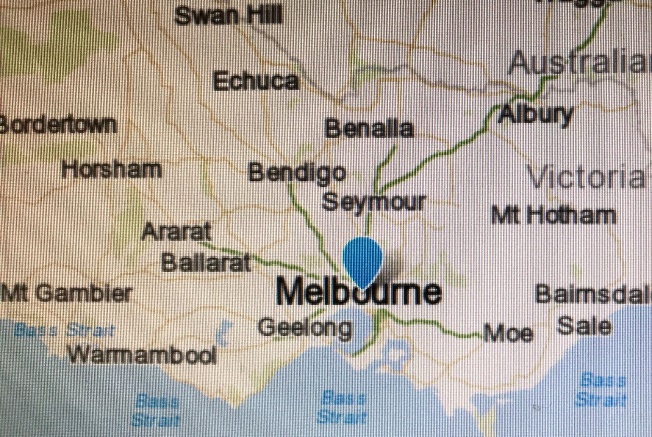
Before I commenced my first Year at the university, my case manager arranged for me to spend one week living with a farming family, Mr. and Mrs. John Anderson, in Harrod in the Western District of Victoria.
The District was settled by returned servicemen under the Soldier Settlement Scheme, and many had fought against the Japanese in Borneo during the Second World War.
Life was good for them as there was a strong demand for wool and the price of wool was historically high due to the Korean War.

Shearing sheep 
Wild Rabbits 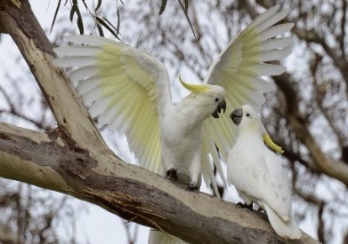
Cockatoos 
Golden wattle, Australian floral emblem 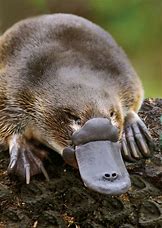
Platypus 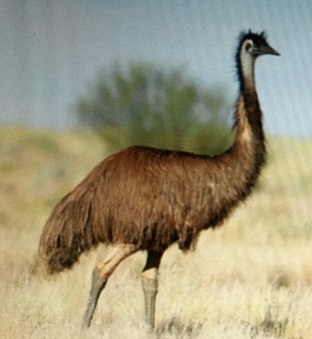
Emu 
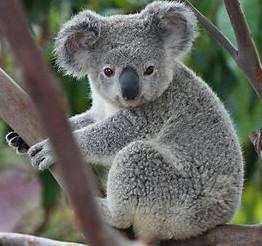
Koala Bear 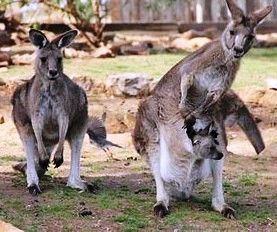
I took a train from Melbourne to Horsham and was met on arrival by Mrs. Anderson. The next morning, I accompanied Mr. Anderson (John) to see his flock of sheep numbering over one hundred heads. John also had about a dozen dairy cattle and a couple of horses.
On the second day, I helped John’s son, Ian, with another farm worker, loading hay packs onto a truck to cart away for storing in the storage shed for feeding animals in winter. The work was heavy and tiring but I toughed it out.

Hay packs left in the field 
Hay packing machine 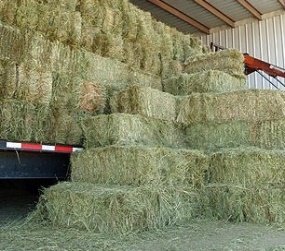
Storage shed
In the following evening, there was a gathering of the Country Women Association members and their families and I was invited. Mrs. Anderson was the president of the Association. She also asked me whether I would like to give a talk about my country.
At the meeting, Mrs. Anderson introduced me as an Australian scholarship student from Borneo coming here to study engineering at their university in Melbourne. I explained that I was from the northern part of Borneo, called Sarawak, a British colony, population about 600,000 comprising 40% Dayaks, 25% Chinese, 20% Malays, and others.

Sir Jams Brooke KCB 
Sir Vyner Brooke GCMG 
Sir Charles Brooke GCMG
My country, Sarawak, had a colorful history. It used to be a part of the Malay Sultanate of Brunei. However, the Sultan’s authority was limited to the coastal area settled mainly by Malay fishermen while the interior land was inhabited by hill tribes known as Dayaks who were rebellious against the Sultan as well as warring among themselves. They were the head-hunters of Borneo and had the ghastly practice of cutting off their enemies’ heads and proudly displaying the skulls as war trophies to show off their fighting prowess.
During the early 19thcentury, an English adventurer, James Brooke, arrived in Sarawak in a schooner and found the country was in chaos. He decided to join the Sultan in suppressing the rebellions. As a reward for fighting the insurgencies, he was bestowed the title Rajah to rule over the western part of the sultanate, and thus the Kingdom of Sarawak was established with Kuching as its capital.

Schooner 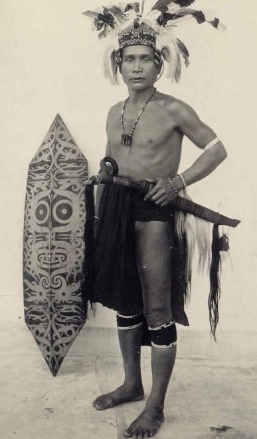
Dayak warrior 
Sarawak Map
Over the years, The Kingdom of Sarawak expanded its territory, by treaties or annexation, at the expense of the Sultanate of Brunei.
Rajah James Brooke was succeeded by his nephew Charles Brooke who, upon his death, was succeeded by his son, Charles Vyner Brooke. All three rajahs were granted a knighthood by the British Monarchs.
Rajah Charles Brooke set up a system of public administration and promoted agriculture and mining development. Chinese immigrants were welcome and most worked in the thriving rubber plantations and gold and antinomy mines, whilst others worked as market gardeners growing peppers and other produce. When oil was discovered, more immigrant workers were needed to work in the oil field.
Christian missionaries were encouraged in the kingdom setting up schools and propagating the gospels. The main missionaries were the Anglicans, the Catholics, and the Methodists.
The advent of the Brooke government brought an end to the warring among the tribes and head-hunting was outlawed. Sarawak was now a peaceful country where the various communities lived in harmony.
Rajah Vyner Brooke continued the policies of his predecessors and the booming economy enabled him to modernize his government institutions. He gave up his absolute power, introduced a new constitution, and set up the Council Negri (Legislative Council) which comprised a majority of senior government officers appointed by him and a smaller number of Dayak chieftains, Chinese leaders and, and Malay headmen. The Council was empowered that no legislation would become law and no government money spent without its approval.

Timber logs 
Sago palm 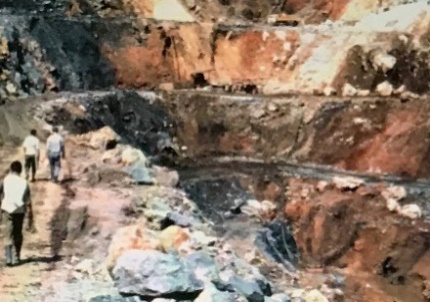
Open-pit gold mine 
Oil production 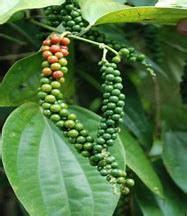
Pepper vine 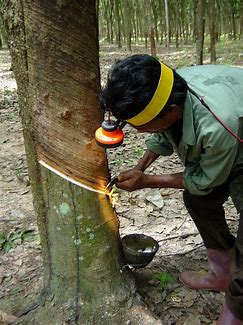
Tapping rubber tree

Rhino-Hornbill, Sarawak Faunal emblem 
Orangutan
Education, however, was left to the community groups to operate each with their own agendas.
The Brooke dynasty continued for a century until the country was occupied by the Japanese imperial armies during the second world war. Towards the end of the war, the Kingdom of Sarawak was liberated by the Australian forces and became a British colony when the Brooke family ceded Sarawak to Britain. As a crown colony, Sarawak now had a governor appointed by the British government, in place of the rajah.
I also talked about the climate and the infrastructure, or rather a lack of infrastructure in Sarawak. I thought my talk was well-received as two of the farmers complimented me on my knowledge of my country.
After the meeting, another farming couple, Stan and his wife, Robyn(?), came up to invite me to stay with them for the remaining three nights of my trip. Stan said loading hay packs was not for me as I was not used to such work. He would like to take me to Mount Gambier in South Australia to see the famous Blue Lake about a two-hour drive away, and the Andersons had agreed to the arrangement. Thus, I thanked Mr. and Mrs. Anderson for their hospitality and left to join Stan and Robyn.
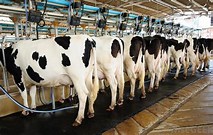
Milking cows 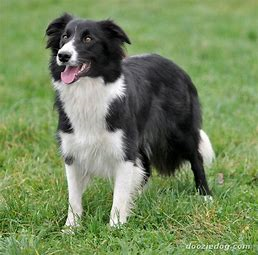
Shearing sheep 
Collie herding sheep 
Collie herding cattle
Stan was also a returned soldier and a sheep and cattle farmer. Stan got up early in the morning to milk his cows. He had a collie, an intelligent and well-trained dog, which herded his cows to queue up at the milking shed while he prepared his machine for milking.
Later in the morning, Stan and Robyn drove me to Mount Gambier to see the Blue Lake – an extinct volcano crater that changed the color of its water from steel grey in winter to bright cobalt blue in summer.

Blue Lake 
Greyhound racing 
Yabby fishing
In the evening, Stan took me to see greyhound racing. While he was placing his bet, Stan asked me to look over his shoulder. There was a belief among some Australians that a “Chinaman” looking over their shoulders would bring them good luck in gambling. Unfortunately, Stan’s greyhound came in nearly last. He just shook his head and mumbled to himself, not true. I tried to explain to Stan that I was no pure “Chinaman” as I was educated in English and had thus lost my good luck charm! We both had a good laugh.

Sweet & Sour rabbit 
Yabby-ham fried rice 
Yabby
Stan liked eating Chinese food and asked me whether I could cook Chinese food. I said I could cook simple dishes like fried rice. I knew many Australians liked fried rice and sweet and sour pork. There were plenty of yabbies, which tasted like prawns, in Stan’s fish pond. They usually just boiled the yabbies and eat them with salt and pepper. Robyn had some ham, peas, and eggs in her refrigerator. With a packet of rice and a bottle of soy sauce bought from the grocery shop, I had enough main ingredients to cook my yabby-ham fried rice. There was no pork in the house and I thought a rabbit would do. Before the use of rabbit poison, there were plenty of wild rabbits on the farm, which tasted like chicken if properly skinned. With a shotgun Stan lent me, I soon managed to shoot a rabbit on the paddock. Together with a small can of pineapple, some onions, and tomatoes, I had enough main ingredients for cooking my sweet and sour rabbit. Using bits of rabbit meat as baits, I pulled up a dozen yabbies from the fish pond for cooking my fried rice. At dinner that evening, my fried rice and the sweet and sour rabbit went well with Stan’s cold beer and we finished off a large bowl of fried rice and a plate of the sweet and sour rabbit.
Next day, I said farewell to Stan and Robyn and thanked them for being gracious hosts and for the enjoyable time I had on their farm. Part of the objective of the Australian Colombo Plan was to promote people-to-people relationships and bring Australia and Asia closer together. In this respect, I thought my trip was successful. I returned to Melbourne feeling a mission accomplished.
Written by Leong Chee Seng 龍志成 22 January 2019
From the desk of the Editor: Please stay tuned for more to continue soon. Please click to “follow” so that you will be notified automatically .
FOOTNOTE:
The author Leong Chee Seng, 龍志成 was among the first batch of students graduated from Kuala Belait Chung Hua Primary School after the 2nd world war. For the story before St. Thomas’s School time, see “Memories of our venture to China for further education”
DISCLAIMER:
Some of the photos are from social media. Some of the images in this blog are copyright to the respective owners. Please let us know if you have any issue with copyright. Let us know and we will promptly remove them.
 Memories of The Way We Were
Very enjoyable story and history lesson. Beautifully written and I also enjoyed the accompanying photos.
LikeLike
Excellent.
I didn’t know Colombo Plan existed then. One of my “friend” knew but would not tell me about it when I asked him for details.. he got a scholarship himself.
LikeLiked by 1 person
Very informative, entertaining & so well written. Look forward to reading more from the author.
LikeLiked by 1 person
Thank you for your gracious comment.
Leong Chee Seng
LikeLike
Thank you, Ruey, for your kind comment. I am glad you like my story.
I was very lucky to be granted British citizenship by naturalization with full civil rights, which was rarely granted to persons living outside the United Kingdom. Naturalization was a cumbersome process involving checking of a person’s character and passing the language and Life in the UK Tests. It normally took about at least 6 months. In my case, all the paper works were done by Sarawak Government. When my application was approved, the British High Commission in Australia, arranged for me to pledge allegiance to the Queen and I was granted British citizenship together with a British passport.
Thank you, Laurence, for your generous comment.
The Colombo Plan was created in 1950 at the commonwealth Conference of Foreign Ministers in Colombo. The Commonwealth of Nations consist of the former colonies and territories of the British Empire. Its main objective is to promote interest in and support for the economic and social development in Asia and the Pacific. Under the Colombo Plan assistance, infrastructure projects were constructed in the developing countries, and scholarships were granted by the developed countries such as Britain, Australia and Canada, to train people needed to manage the infrastructures and the growing economy in the developing countries. (For additional information on the Colombo Plan scholarship, see My Time As An Australian Scholarship Students – Australian Scholarship Award.)
Leong Chee Seng
LikeLike