
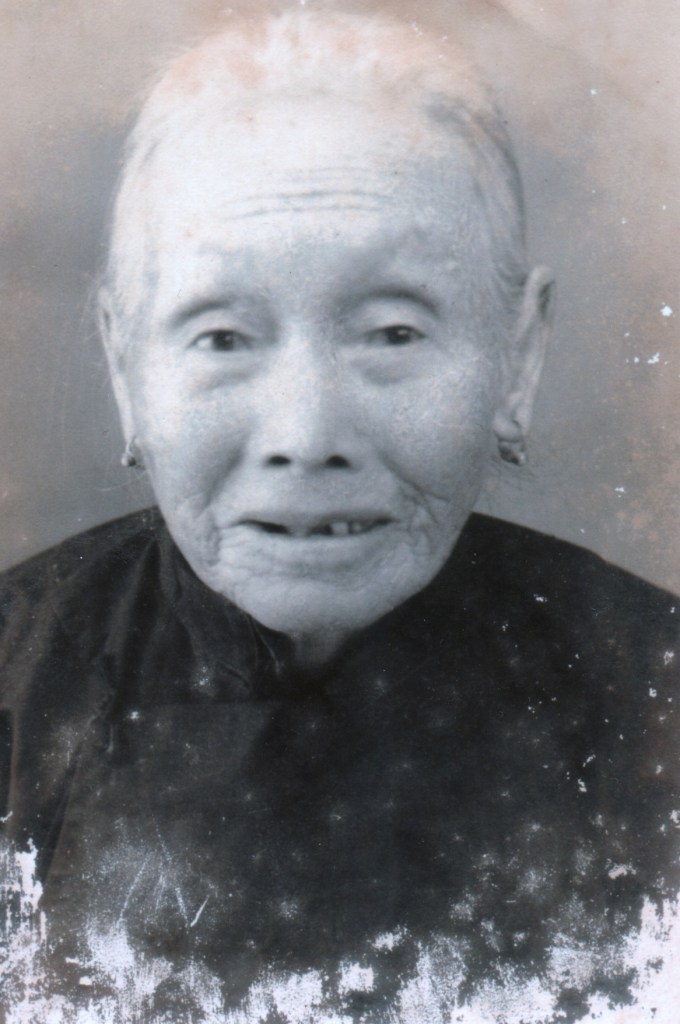
My Mother Lim Ah Yapp 林亞葉 (1901 – 1988) came from a simple traditional village family 廣東省中山縣汕頭 in Huangpu, Zhongshan. Her parents had a medium size farm. They grew food to feed the family. They sold any extra in the local market. Every able person in the family has to work very hard for long hours on the farm.
As mother was growing up, she helped her mother with household chores. As a daughter, this was expected of her. Her mother was busy in the fields or tending to the younger children. During those times, my mother would light up a wood fire stove. She used it to cook rice and boil water. She does household chores like cleaning the house, washing clothes and also learning how to help on the farm. All girls at that time had to learn to do those essential chores. As the children get older and stronger, they help in the farm. The younger ones take over with house chores. That was the way it was back then.
As a teenager, My Mother, Lim Ah Yap, faced family pressure. Under this pressure, she was betrothed to marry a very sick younger teenager. This was a desperate attempt to ward off the ‘illness-evil’ in him. This was an old Chinese tradition belief, that if in bad luck, find the lucky stars. This teenage boy was critically ill and his family were desperate to save him. He was too sick to attend the wedding ceremony, so a rooster/cockerel was used as a proxy. Unfortunately, this did not work because the young boy dies within the same day. His grieving family blamed mother for not being lucky enough to save him and blamed her for his death. Mother cannot go home to her family. As a girl, once you are married out, you belong to your husband’s family. This rule applies even after his death. This family viewed her like a bad omen. They treated her harshly like a servant. She worked inside the house, did laundry, and carried water for washing and bathing for all the family members. She frequently went to the forest to cut and carried wood for cooking and heating. She also worked on their large farm.
Under such harsh living conditions she grew desperate – there is no hope for her. She was widowed and had bad luck. She could see no change in her future. She is going to work for this family and be treated cruelly for the rest of her life.
One day, she secretly escaped with a few friends (maids) in similar situations. They made their way to the city, where many new developments were in progress. Together, they found a small place to rent and ventured out every day looking for any manual work. Because of their previous fieldwork, they were all physically strong and found jobs for a road construction company.
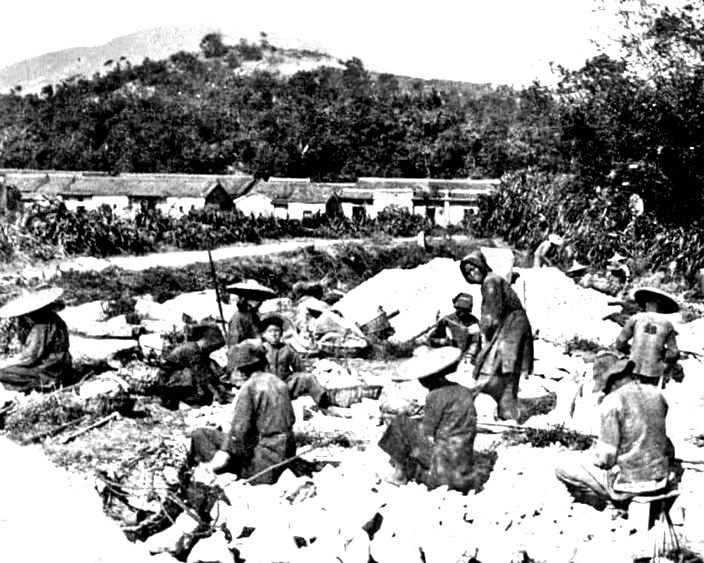
Using hammers and chisels they had to break larger rocks into small pieces and carry them to the road site. The open field work was back-breaking. My mother and her friends did this job to pay for the rental. They did it for food and for their freedom. I can just imagine that this is the first time they are working to earn money for themselves. They are working for their freedom and independence. All these hardship adds to their determination to survive and seek a better future.
Whilst out collecting wood in the forest for cooking, my mother heard people talking about going abroad. They mentioned ‘Nanyang’ 南洋 where there are job opportunities. One could work as a housemaid with better living conditions. Seeking a better future and a fresh start, she took the opportunity and to make her own decision.
At that era, people wanted to leave China to earn more money and find their fortune. Many wanted a new life. The British commercialized the migration by offering passages from China on credit. They provided indenture contracts to intending migrants who could not afford the fare. On arrival, the employer claimed the indentured laborer. This laborer was bound to the employer by the terms and conditions of his/her contract.
They detained credit migrants on the ship until the recruiter found employers for them. These immigrants had a bad time living like a livestock and the Chinese referred to it as “the pig business.”
Mother was a little better in her starting venture because the employer found and employed her while visiting China. Her employer paid her passage, and she signed a 2-year contract with no salary. The employer took her to work in Labuan as their house maid.

Here ends the first part of my mother’s story. This story is what I remember and I am hoping my siblings might recall more! Please comment if you have enjoyed it or if you have some more information.
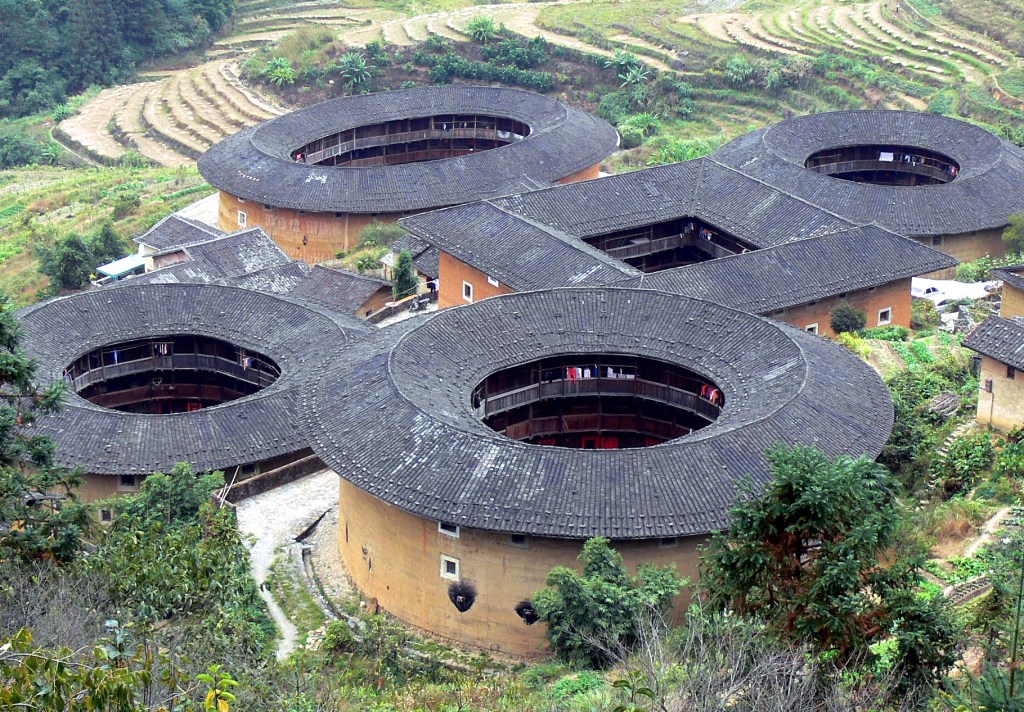
My mother is Hakka. I would like to share some historical facts. This is a typical Hakka housing with a round shape known as ‘TU LAU“土楼”. They designed it as a community hub. It also served as a fortress against external invasions. There is no window on the ground floor, just a shared living room, dining and kitchen. The second floor is mainly used as storage, so there is no window there. The third floor is divided with partitions for privacy among family members. It is the only floor with windows, which are in their bedrooms.
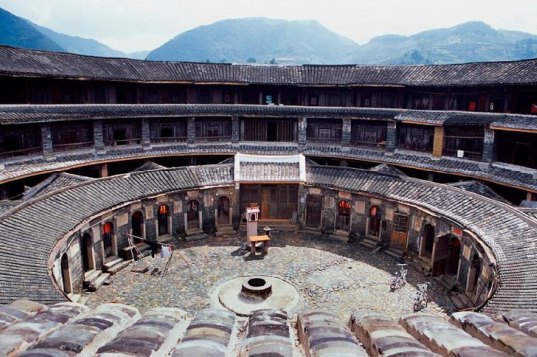
A water well is located in the middle of each “Tulou.” It serves as a central water source for every family who lives there.
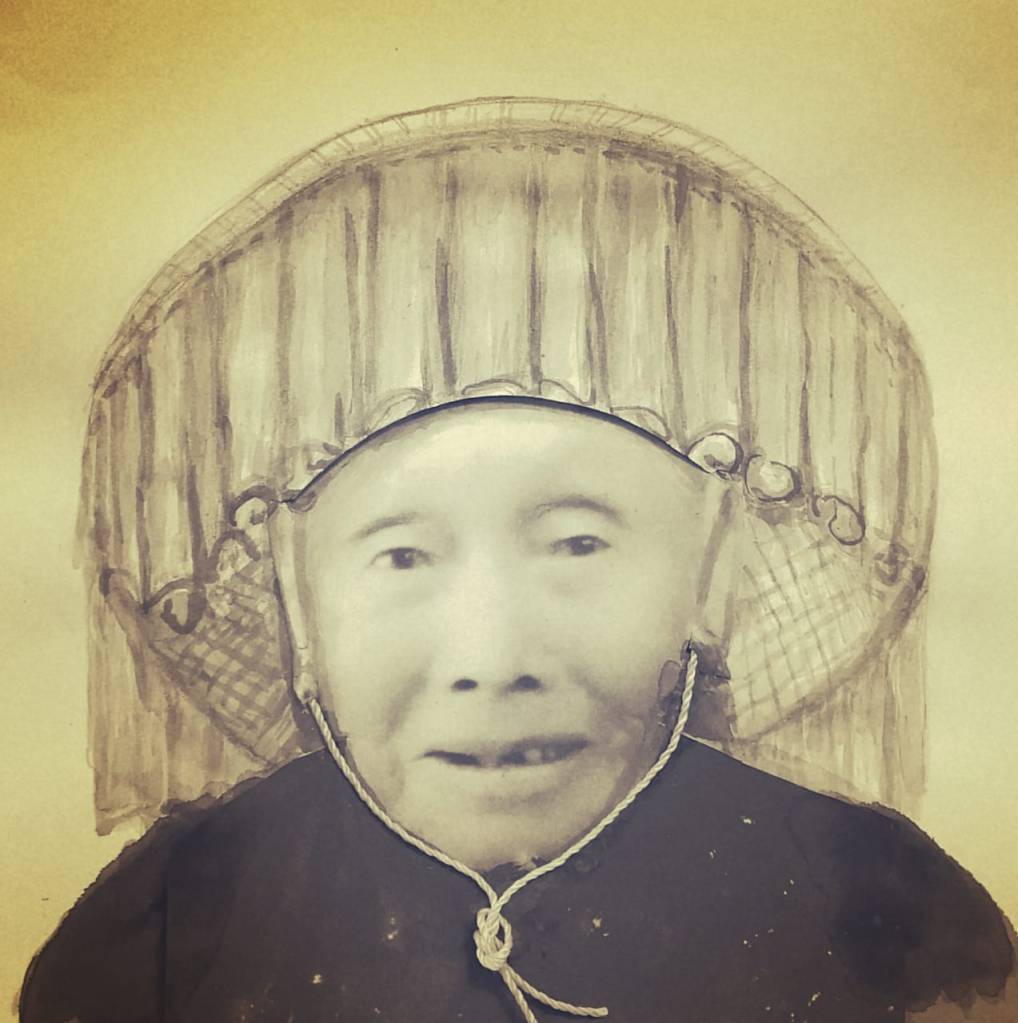
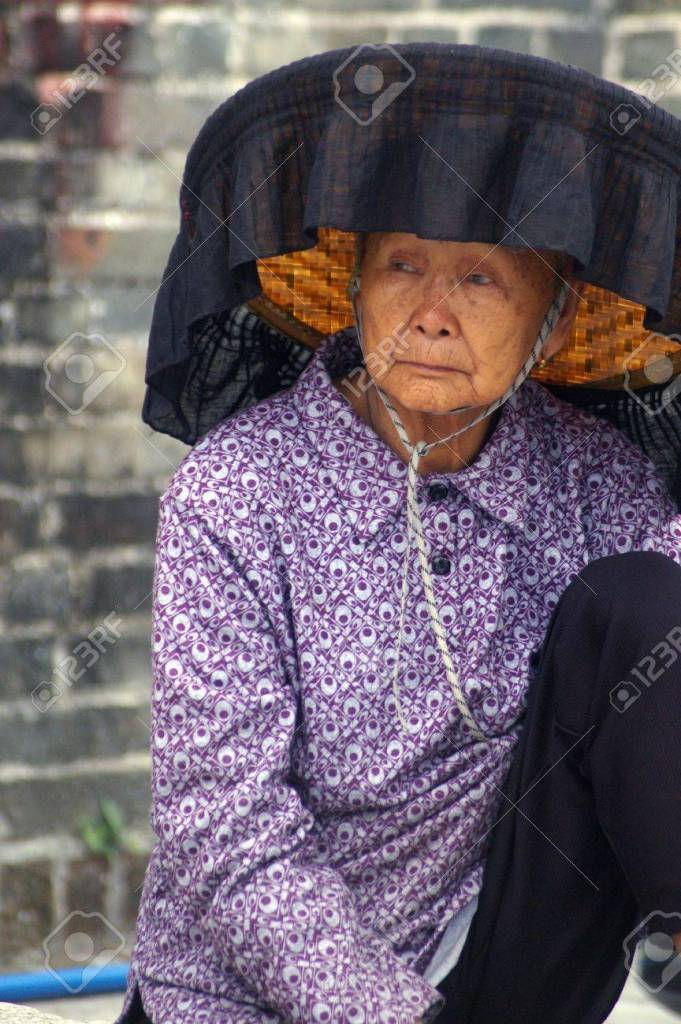
A bamboo hat, called a “cool hat”凉帽”, is wrapped in black cloth. It keeps strong sunlight off the face while allowing air in. female wears 凉帽. Women wear the same pants with wide pant legs as men when working in the field. 客家妇女戴传统的客家帽子,称为“凉帽”
REFLECTIONS
Alone I sit and dream of you, mother. I am in a room so full of lights. But I didn’t see you with me. You have opened the door. The horizons are never too far. Bridges are built over land and sea. I know you are coming on a ship to meet us from so far away. The horizons are never far. It is time for you to say goodbye to your parents.
This song by Celine Dion is for your listening pleasure. It serves as a goodbye to Mother while you read the Legacy of my late Mother “A Journey of Destiny”. The original legacy was written in Chinese Mandarin. If your mother is still with you, you are lucky and blessed with love! If not, and you miss your mother, then this song will be your message to your late mother!
Credit: Thank you for the contributions from the following teams:
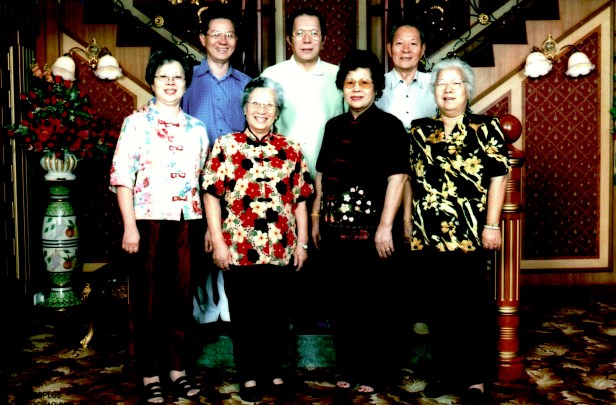
Family Group Producers
Back: Chong See Kui, Chong Ah Jew & Chong Min Chong
Front: Vivien Chong, Chong Nyuk Chin, Chong Kui Yin & Chong Kui Lan
From the desk of the Editor: Readers who wish to read the Chinese version of this article can find it below. https://bruneichongfamilylegacy.wordpress.com/2020/08/18/%E6%AF%8D%E4%BA%B2%E8%B7%A8%E8%B6%8A%E5%8D%97%E6%B5%B7%E7%9A%84%E6%97%85%E7%A8%8B/
DISCLAIMER:
Some photos are from social media. Some images in this blog are copyright to the respective owners. Please let us know if you have any issue with copyright. Let us know and we will promptly remove them
 Memories of The Way We Were
This is a very interesting recollection of our family history and culture. Thank you for sharing this with us. PoPo was so courageous, determined and resilient. What harsh conditions she endured and I am so happy to have enjoyed being a small part of her life. I have very fond memories of her living with us in Melbourne, waiting patiently for Yau Wei and I to return home from school.
LikeLike
Is that you Yin Chen? Your remark was sent from as “Anonymous” Maybe you and Wei can ask your mum to tell you more about her parents; where she was born, hospital or home? where she was staying, in the old house of the shop hose? Palm leave shops or concrete shop? She remembers some unusual events to her or her siblings? How old were you when Popo came to visit you and how long she stayed?
Hope to hear from you soon…we plan to write their story when they landed in KB soon.
LikeLiked by 1 person
What a remarkable story. That shows how difficult and hard life was for people of our parent’s generation. Well done.
LikeLike
It’s amazing to learn stories of my own great grand mother. Knowing that she is such a brave and strong woman makes me so proud. I remember late po po (Chong Kui Lan) did tell me some stories of her but as I grew older the memory of the stories she told began to blur. Hope they’ll be more posts soon.
LikeLike
My late Mother Lim Ah Yapp is a Hakka (guests) group traveling out from the North of China to escape internal wars among the different Kings that rule their own Provinces. So the Hakka groups were just like the nomadic traveling gypsy, keep on moving to find a peaceful place further away from the war zone. Every Hakka group were just like a little kingdom, a powerful leader with maybe hundreds of followers consisting all kind of trades engineers for building homes to live and many of them venture out to find jobs, builders, traders, all their earnings were to finance and support the group; most them were males.
Therefore all the women were left at home to look after the children, cooking, washing clothes, cleaning, because they all live in the same common block of a building. Many women have to work out in the field of plantations to feed the group. My late mother had been working out in the field for many years and because of that she was as very strong as the man, but a very depending person take the long journey to Brunei. please get your children to read her story (there is an on-line translation from Chinese to English) so they understand a little more about the family legacy in print that they can refer to whenever the necessity. Sign up to follow us.
LikeLike
Thank you for sharing these inspiring stories. I have some questions to ask, is there any way that I can contact you maybe via email for these questions?
LikeLiked by 1 person
Thank you for reading our publications. Please send your questions to my email: alphabrunei@gmail.com. I will try to respond back as quickly as possible. Please send me yur name and your contact other wise your mail might go the junk mail.
Tom Chong
LikeLiked by 1 person
[6:22 PM, 7/29/2021] From WhatsApp Miss Susie Koh: This is the best article written by uncle attached with beautiful songs good sound syatem and precious photos to present the historic family with great love
[6:23 PM, 7/29/2021] Susie Koh: Thanks a lot for the sharing
LikeLike
Received comments from Dr Marcus Chen Yu Wei, Melbourne Victoria, Australia on 16 March 2024 as follows:- ”Hello Uncle See Kui thank you very much for sending these photographs. I have not seen many of these before so thank you I have read the stories of your mum and dad on your website and these have been extremely valuable for us to understand the detailed story of the family history. They are very interesting and well written and make us all feel so grateful for all the hardships they endured to raise the family and allow us all to enjoy the life that we have. Because we do not have as detailed and understanding of our grandparents from my dad’s side this has motivated me to find out the story. Best wishes from Dr Marcus Chen Yu Wei
LikeLiked by 1 person